
The Pull Workout

Build a Stronger Back, Better Posture, and Balanced Arms with the Lifeonomics Pull Workout
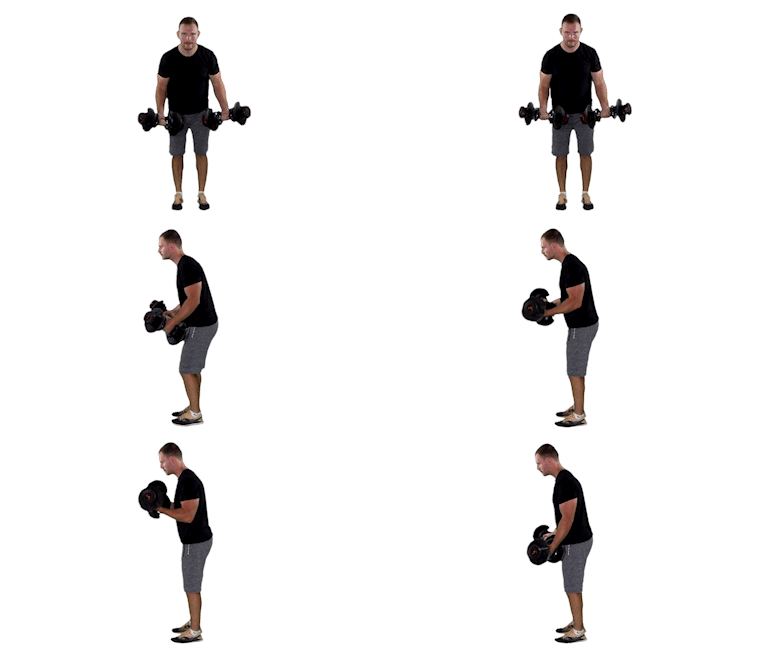
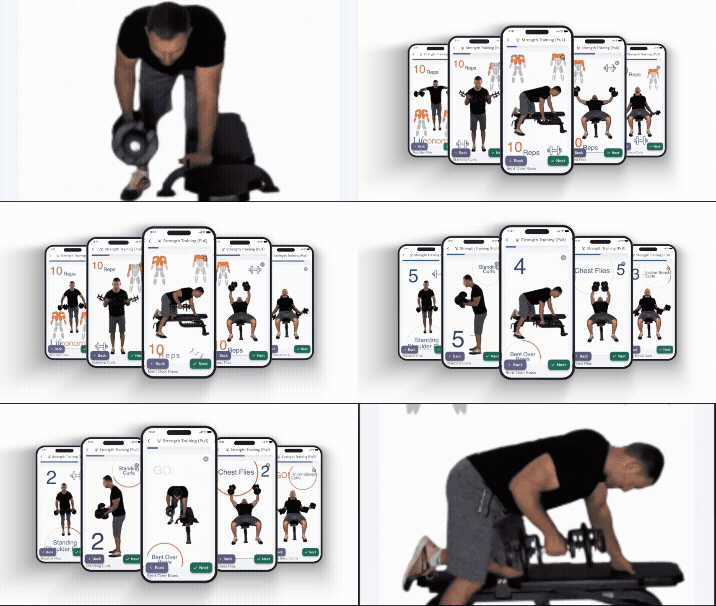
In the Lifeonomics App (powered by LIGHTBRIDGE), the Pull Workout is this week’s focus. It pairs well with the existing Push and Legs routines to create balanced upper- and lower-body training. This guided session emphasizes the pulling muscles of the back, rear shoulders, and arms while weaving in core stability, mobility, and light cardio. Every step includes a GIF how-to visual plus a clear technique summary, and timed holds (such as planks) run with an in-app timer so you stay present and consistent without watching the clock.
What the Pull Workout Targets
Pulling movements train the latissimus dorsi (lats), rhomboids, trapezius, rear deltoids, and biceps, along with grip and spinal stabilizers. Horizontal rows build mid-back thickness; band work wakes up the rear shoulders and scapular retractors; direct curls finish the arms. Front and reverse planks add core stiffness, while the yoga stretches keep tissues mobile between efforts. Speed-bag punches inject a brief cardio element that can loosen muscles and add a calorie-burn bonus.
Modern life (desk work, driving, phone use) rounds the shoulders and weakens the upper back. Consistent pulling work directly counters this by strengthening the muscles that retract the shoulder blades and support upright posture.
Key Moves and Why They Matter
Arm circles and band pull-aparts open the session. Arm circles warm the shoulder joint through an easy full range. Band pull-aparts (light band, tall posture, soft elbows, palms down) activate the mid-back and rear delts so the traps don’t dominate later rows. These muscles are critical for scapular control and shoulder health.
Bent-over rows (single-arm and bilateral standing versions) are the backbone of the routine. They load the mid-back, lats, rhomboids, and rear delts while the core and glutes stay braced. Research consistently shows horizontal pulling builds thickness and functional pulling strength that carries into daily tasks and other lifts.
Curl variations (standing, incline bench, hammer) target the biceps more effectively than rows alone. Studies comparing dumbbell curls versus rows have found greater muscle swelling and longer-term hypertrophy from the isolation curls—especially in the lower region of the elbow flexors—while rows still contribute useful secondary work. Including both gives the best of compound and isolation stimulus.
Front and reverse planks (with in-app timers) build anti-extension and full-body tension. Planks train deep core stiffness that protects the spine, improves posture, and supports every other lift. Research links isometric core work to greater torso stiffness and reduced low-back strain risk compared with many dynamic alternatives.
Mobility and finishers (yoga prayer-to-back stretch, shoulder and chest flies, speed-bag punches) keep the session flowing, restore range, and add a light metabolic touch without leaving the app.
Science-Backed Benefits
Resistance training in general improves muscle strength and size, physical function, bone density, metabolic health, and even mood and sleep quality, according to large reviews synthesized by the American College of Sports Medicine and others. Hypertrophy responds especially well to sufficient weekly volume and progressive loading; training a muscle group more than once per week is often superior to once-weekly work when total volume is matched.
Specific to this style of session:
Stronger posterior chain and scapular muscles improve posture and reduce the forward-shoulder pattern common from prolonged sitting.
Balanced pulling plus core work supports shoulder stability and may lower injury risk during pressing or daily activities.
Grip and arm strength carry over to everything from lifting groceries to better performance in other training.
Consistent sessions help preserve or build muscle as we age—an important factor for metabolic rate, independence, and long-term function.
The app’s structure makes these benefits more attainable. Technique cues and GIFs reduce form breakdown, timers keep holds precise, and the guided flow encourages completion rather than decision fatigue. That consistency is what drives the real adaptations.
Putting It All Together
The Pull Workout is not just about a thicker back or fuller arms—it is about creating the physical capacity to move well, stand tall, and have energy for the people and activities that matter most. Pair it with the Push and Legs routines, fuel it with solid protein and recovery, and track progress in the app. Small, repeated efforts compound.
Open the Lifeonomics App, start the Pull Routine, and train with intention. Your back, posture, and overall resilience will thank you. #LiveNow


Comments